




Tag: ai

How Vehicle Cabin Model Order Reduction Can Optimize Passenger Comfort and Range
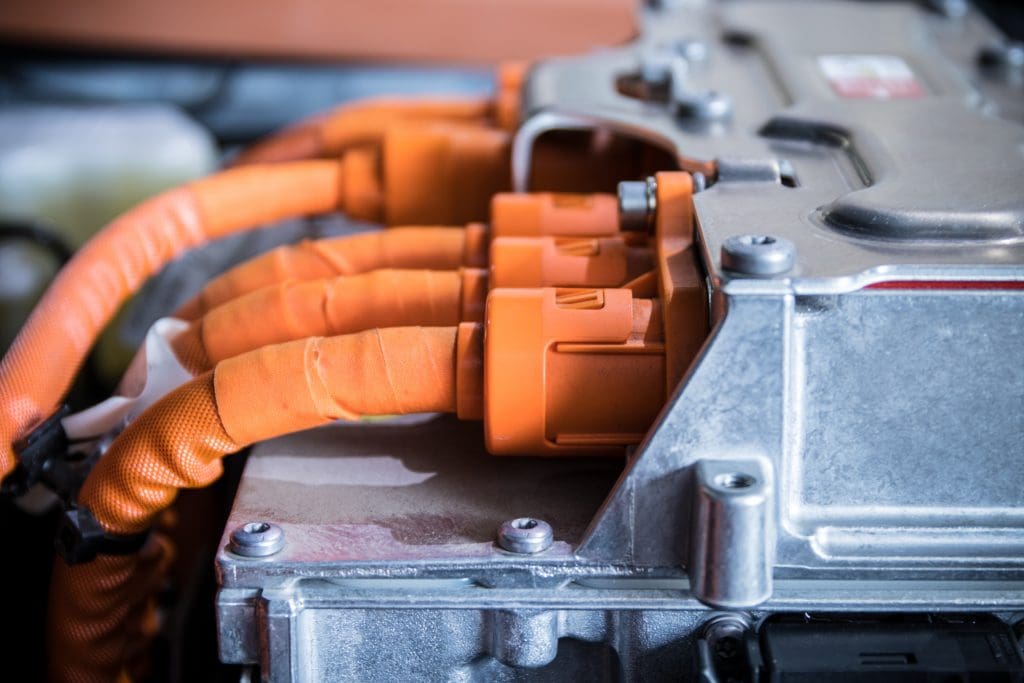
Why Cabin Modelling? Efficient cabin modelling has become crucial for the new age battery electric vehicles (BEVs) as every bit of energy that can be conserved will help increase the range of a BEV. The goal of a design engineer is to achieve an optimal balance between passenger comfort and the energy consumption of the […]

Leveraging Machine Learning for Early Design Decisions on an Accessory Belt Drive Simulation
There are various challenges faced by an automotive engineer while designing a robust and optimized accessory drive system. Most original equipment manufacturers (OEMs) rely on different suppliers for their engine belt(s) and accessories (e.g. water pumps, alternators, A/C compressors, etc.). This leads to challenges in obtaining a comprehensive set of input data to incorporate in […]
Dynamic Machine Learning for Modeling and Simulation
Incorporating Dynamic Metamodeling Simulation To save computational time, engineers are persistently trying to speed up physical models, and some situations absolutely require faster simulation speeds. These situations might include more advanced co-simulation tasks, performing model-based optimization on a slower physical model, or the need to have a surrogate model for XiL (X-in-the-Loop) applications or to […]

Optimizing Neural Networks for Modeling and Simulation
Why Neural Networks are Effective in Machine Learning Neural networks are powerful machine learning [ML] models that can capture highly nonlinear relationships between inputs and outputs within a dataset while being computationally inexpensive to execute. The benefits of neural networks for modeling and simulation activities, using the simulation platform GT-SUITE, were covered in part 1 […]

Enhancing Model Accuracy by Replacing Lookup Maps with Machine Learning Models
Machine Learning and Modeling Simulation Machine learning [ML] models, such as neural networks and other types of metamodels, are fast-executing mathematical representations of data that serve a variety of modeling and simulation purposes, including: Replacing computationally expensive physics-based sub-systems in integrated simulation models (for instance, we are using GT-SUITE simulation models for the HVACR industry) […]