← Back to All Solutions

Solutions

Aircraft Fuel Systems

From CAD to Mission: Fuel Systems Proven Before First Flight

Solution Overview

Fuel System for a Fail Safe Flight

The safe, consistent operation of an aircraft fuel system is a critical design consideration, as even minor disturbances can have serious flight consequences. Design complexity is further increased by the many transient conditions, including forces from aircraft maneuvers,  possible coupling to the oil and cooling systems, and variable ambient conditions. Successful design therefore depends on integrated, physics-based and AI-enabled models that test and validate the fuel supply system before the aircraft first flies. 

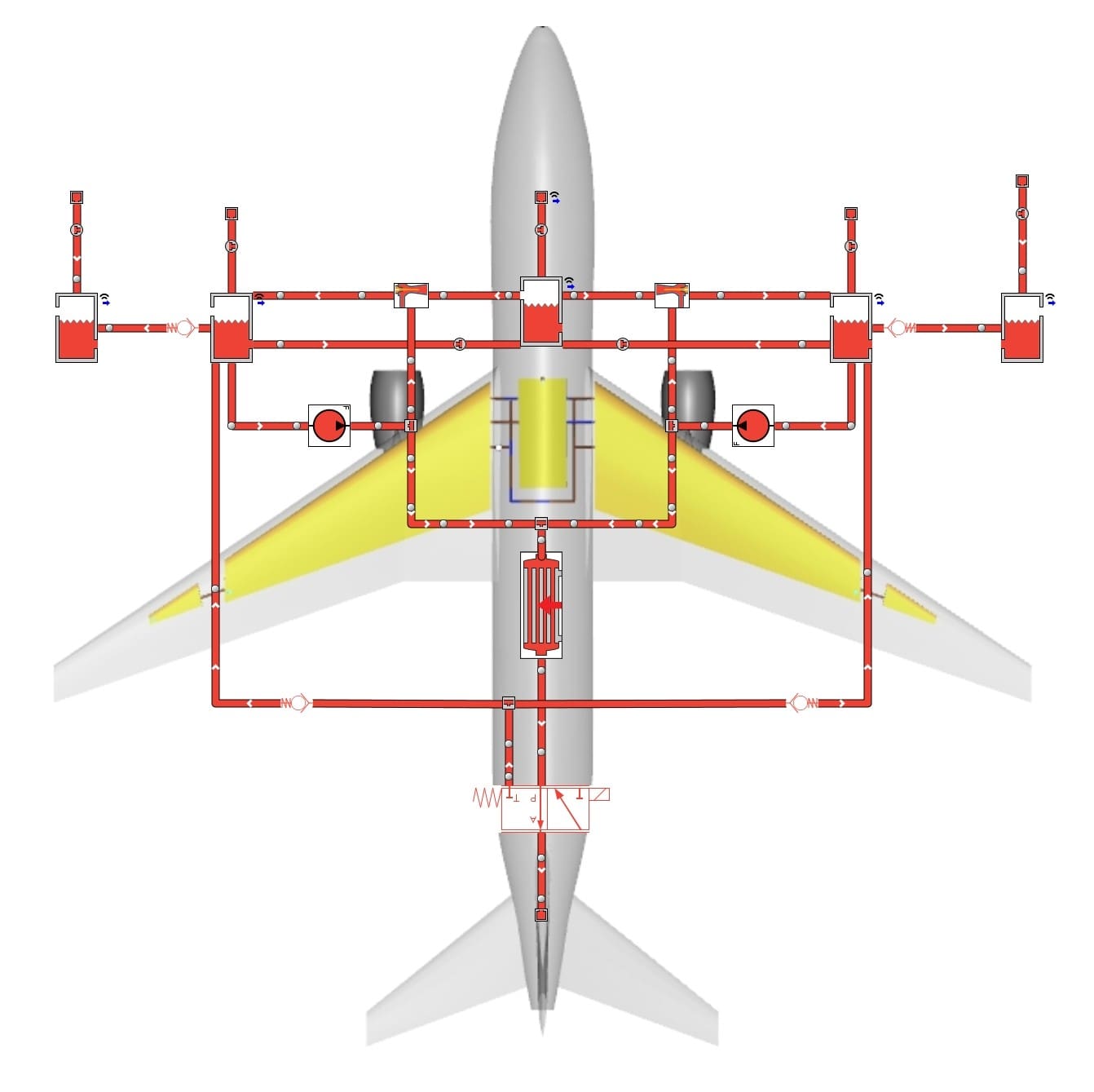
GT-SUITE enables engineers to predict pressures, temperatures, flow rates, and cavitation risk throughout the system. Engineers can optimize the design by evaluating different pump and line sizes before hardware exists. The software can simulate tank behavior during pitch, roll, and negative-g maneuvers to confirm tank fuel ports remain submerged. Fuel thermal management can be easily studied with ambient and integrated system heat loads to ensure temperature remains in a safe operating band. An integrated machine learning tool can further extend these studies by supporting diagnostic tools such as system fault detection. 

APPLICATION HIGHLIGHTS

Complete Fuel System Modeling

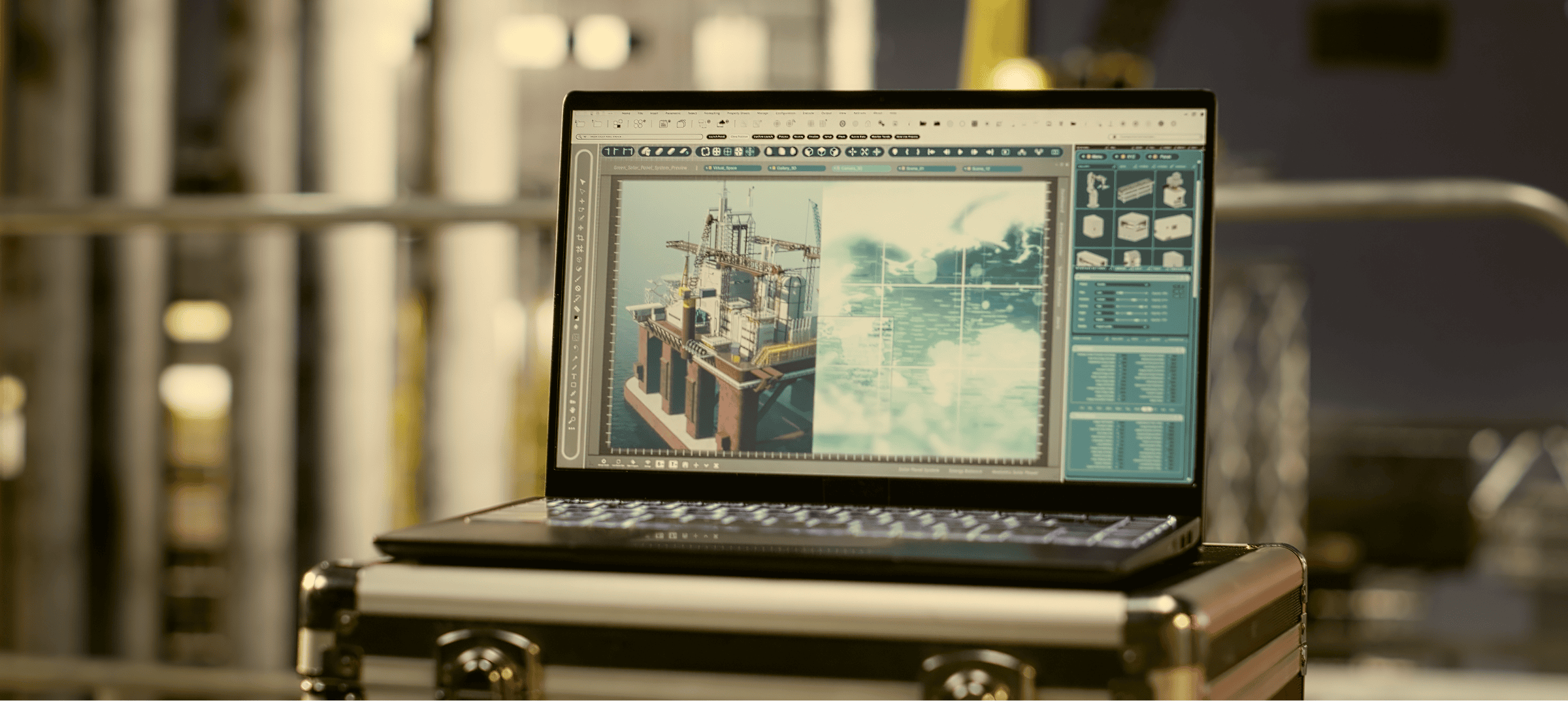
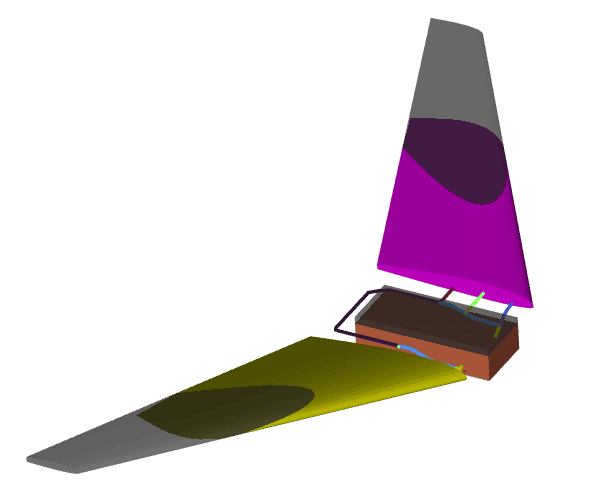
  • Build fuel lines and tanks directly from CAD geometry 
  • Model tank fuel levels, fuel port coverage, and center of gravity during aircraft maneuvers 
  • Study pressure pulsation (e.g. water hammer) and pressure distribution, and assess fuel cavitation risk with accurate, robust solver 
  • Solve conjugate heat transfer efficiently, with 1D or 3D FEA options to match model fidelity to problem complexity 
  • Represent pumps, ejector pumps, and valves with either predictive or performance-based (map or data-driven) models 
  • Detailed and flexible heat exchanger modeling options for system integration and fuel heating or cooling 
  • Define mission and environmental conditions, including altitude, attitude, and six degree-of-freedom motion 
  • On-board inert gas generation system (OBIGGS) modeling, including built-in 3D CFD solution to track gas species distribution in a tank to ensure safe inerting system design 

Advanced Features

Advanced Simulation Capabilities

Analyze fuel transport, thermal management, inerting, and system dynamics under realistic operating conditions.

check mark icon

Tank Modeling

Apply real flight accelerations to tank geometries and see how liquid levels respond. Confirm that fuel ports stay covered, so the engine receives a steady supply. Capture heat transfer with the tank walls to track fluid temperatures and pressures and predict fuel evaporation rates.

check mark icon

Cavitation Prediction

GT-SUITE automatically detects and models cavitation whenever local pressure reaches the fluid’s vapor pressure. This gives you accurate predictions of pump and valve performance under the most demanding operating conditions.

check mark icon

Transient Aeration Modeling

Track free and dissolved gas separately throughout the fuel system. Captures the release of dissolved gases from the liquid at low pressure, to more accurately capture fluid properties at these operating points.

check mark icon

Conjugate Heat Transfer

Pair 1D flow with GT’s native 3D thermal FE solver to get the accuracy of 3D conjugate heat transfer at near-1D speed. High-resolution thermal models easily integrate into the system-level simulation.

Connect with an Expert

Looking for guidance on a systems simulation challenge or project? Fill out the form below and our team will reach out to discuss how we can help.